
Who's Buried in St Paul's Cathedral

Who's Buried in St Paul's Cathedral

St Paul's Cathedral is one of the most iconic landmarks in London. It's also one of the most visited, with countless people wandering its halls throughout the year. But St. Paul's also doubles as a crypt, where some of the bravest and brightest minds are laid to rest. But who's buried in St Paul's Cathedral? Find out below!

Including:

  • Aethelred the Unready
  • Sir Christopher Wren
  • Horatio Nelson
  • Joseph Turner
  • and more!

Aethelred the Unready

We'll start at the beginning because chronological order rules. So, hop in your time machine as we take a journey back to 1016 and attend the funeral of the late King Aethelred the Unready. As you can guess by his title, he wasn't the most beloved king.

So, was it preparedness? Was he too young to take the throne? Well, no. See, Aethelred's title is actually a mistranslation. The original name more closely translates to "ill-advised". Historical documents from his reign detail questionable decisions that bordered on comedic. When Vikings came knocking at his door with blooded axes, Aethelred the Unready chose to try and pay them off rather than meet them with steel. But, when all your opponent really wants is a payday, giving them what they want is hardly a deterrent. In fact, they just want more - like a modern email scam. As such, many more Viking clans came a-knocking, quickly drying up the country's coffers.

Regardless of his choices - and unwise advisors - Aethelred the Unready lies buried at St. Paul's Cathedral. And, while he might not top any lists of the who's who of those buried in St. Paul's Cathedral, he tops ours. Again, because of chronology.

Image courtesy of Natata/Shutterstock

Sir Christopher Wren

You may have never heard of ol' Aethelred, but you've almost certainly heard of Sir Christopher Wren. An architectural tour de force, Wren is responsible for many of London's most iconic landmarks. The Royal Observatory in Greenwich, Kensington Palace, and yes, even St. Paul's Cathedral are just some of the many structures he designed in the wake of the Great Fire of London, which destroyed much of old London on a hot summer's day in 1666.

So yes, the big man even designed the very building where he was laid to rest. But did you know that nearly wasn't the case? In fact, after his death, there were no plans to entomb him in St Paul's. However, thanks to a public outcry, plans changed.

And, rather amusingly, Wren even joked that, when designing the building, he had the perfect place to put his tomb. And, when you go to see his final resting place, you'll find it in the exact same place he first pointed out. Now that's a story!

Horatio Nelson

Next, we take to the seas and toast this legend of an admiral without comparison. Horatio Nelson was a hero of the Napoleonic Wars, ensuring decisive victories against the French.

Having fought in constant wars from his younger years through to his Admiralcy, Nelson's luck ran out during the famous Battle of Trafalgar, when a musket round pierced his shoulder, lung, and spine. While it may be a struggle to survive such wounds in the modern day, back in the 19th Century, it was a death sentence.

But a man of such renown could not be buried at sea. There was only ever one place Nelson would be buried; St. Paul's Cathedral. But the journey from Trafalgar to London is long, and there weren't exactly freezers back then. So what did his crew do? They buried his body in a casket full of brandy, which just so happened to be Nelson's tipple of choice. The brandy helped preserve the admiral's body as it was safely transported to St Paul's.

A boozy return for a deserving fellow.
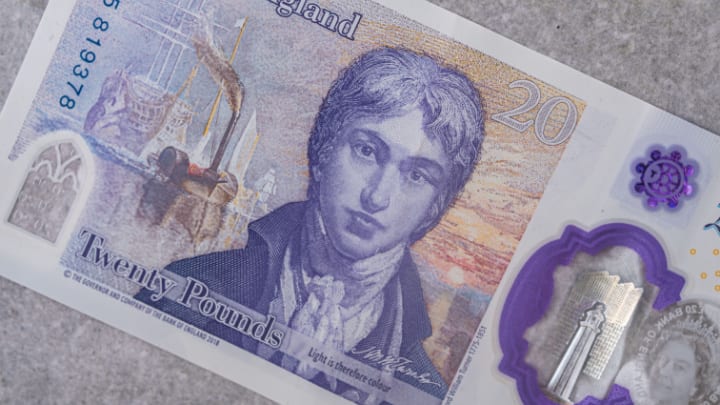
Joseph Turner

Yep, St. Paul's Cathedral doesn't just welcome war heroes, kings, and giants of the architectural world. It welcomes painters too. Ladies and gentlemen, Joseph Turner.

Turner was known for his breathtaking paintings capturing the essence of nature's beauty. Famous for this oceanic artwork, you'll likely recognise many of his paintings like The Shipwreck, Fisherman at Sea, and The Fighting Temeraire.

Turner's work is almost immediately identifiable - no one paints quite like that. But legends suggest this isn't due solely to his skill. Supposedly, he made his own paints using unique elements such as herbs and spices, giving his paintings their unique look.
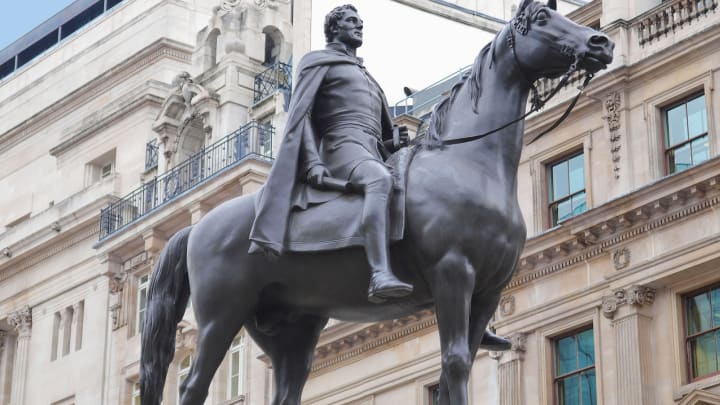
Duke of Wellington

Just when you thought we'd turned a corner, boom, another war hero appears! And yes, it's yet another military leader whose biggest triumphs occurred during the Napoleonic Wars. However, the difference between Horatio Nelson and the Duke of Wellington, aka Arthur Wellesley, is that while Nelson's victories took place on sea, the Duke of Wellington's victories happened on land.

But, while his military prowess has been celebrated for centuries, the ol' Duke has a sense of humour too. At dinner one night, long before his death in 1852, Wellesley said that he didn't care where he was buried as long as they buried him in his boots. Maybe you had to be there?

Either way, his wish came true, and he now rests beneath St. Paul's Cathedral, buried in his boots.
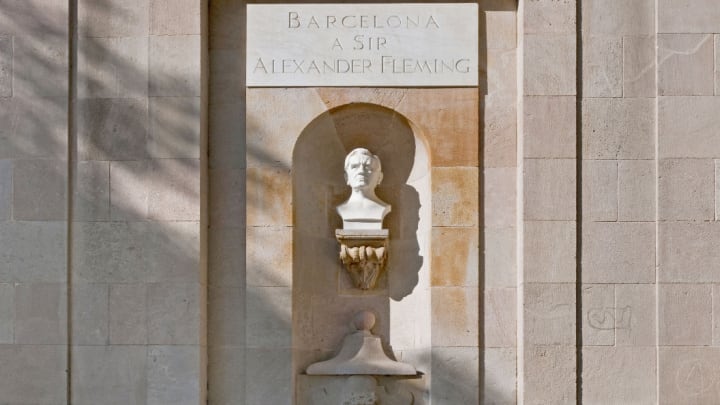
Alexander Fleming

And finally, last but certainly not least on our list is perhaps the most deserving. He may not be a king, an artist, or a "war hero" - though he did serve in a war - but his work has arguably saved more lives than anyone else. Not just on this list, but on the planet. You may not know his name, but you know his work. Ever taken an antibiotic? Well, you might not have if it wasn't for Alexander Fleming.

The brilliant Scottish microbiologist was the first to discover that bacteria avoided certain fungi. Following testing, he realised why; said certain fungi kill them. This discovery snowballed into penicillin, the first antibiotic. And, to put it mildly, penicillin changed the world. No longer were infections a roll of the dice. Now, people would survive.

If anyone deserves their resting place beneath the hallowed halls of St. Paul's Cathedral, it's Alexander Fleming.

So, if you were wondering who's buried in St Paul's Cathedral, wonder no more. Of course, this is just a handful of the many luminaries who now call it "home", so go visit and see them all for yourself! Westminster Abbey is another popular burial place for famous faces of history so you could have your fill of historic graves in Westminster Abbey or St Pauls' Cathedral but with the London Pass, you can visit both and even skip the queue at St Paul's, as well as all of London's biggest attractions, for one low price!

Dom Bewley
London Travel Expert

Build your unique London itinerary with our trip planner

Who's going?
Adult
1
Child (5-15)
0
How many days?

What do you want to see?

Continue reading

The Royal Naval College in Greenwich, South London.
Blog

South London Attractions

South London is the catch-all term employed for much of the area ‘sarf’ of the River Thames, a mystical zone where West End cabbies fear to tread and where the cool kids hang out at trendy Peckham and Brixton cocktail bars. It’s also where you’ll find fab London landmarks like the Crystal Palace Park dinosaurs, Brockwell Lido, and the fascinating Horniman Museum with its famously overstuffed walrus mascot. Read on for our pick of the South London attractions you should go out of your way to see. Greenwich There are a great many attractions to tempt day trippers to ultra-hip Greenwich, the historic village that sits on a sharp bend of the Thames’s south bank. Chief among these are the Cutty Sark, Royal Museums and Royal Observatory, but there’s loads more to enjoy here. Shop the cute Greenwich Market (and sample some of the wonderful street food here while you’re at it); take in fine city views from Greenwich Park; and check out the latest contemporary art, fashion and photography from local artists at the NOW Gallery. But, most of all, don’t miss the chance to take a stroll beneath the Thames itself, via the awesome Greenwich Foot Tunnel. This marvel of early 20th-century engineering is 1,215 feet of cast-iron, concrete and white-glazed tiles, set 50 feet beneath the surface of the river. Emerge at the southern tip of the Isle of Dogs for spellbinding views back across the Thames to the Royal Observatory. The Crystal Palace Park Dinosaurs Named for the huge glass structure that was relocated here from Hyde Park following the Great Exhibition in 1851 (but sadly now long gone), Crystal Palace Park is a typical Victorian pleasure garden that retains many of its playful original features and quirks. Case in point: the much-loved crumbling dinosaur sculptures that bask in and around the lake. What these beautiful beasts lack in realism they more than make up for in charm, with the high camp of the megalosaurus proving a particular highlight. Fill your boots with fun selfies then stroll the park’s curvaceous lanes, taking in replica sphinxes, haunted statues, a cool maze, and Crystal Palace Bowl, the legendary outdoor venue where Bob Marley played his last ever UK gig. Horniman Museum and Gardens It’s a truth universally acknowledged that London’s smaller museums are often its most interesting. The Horniman proves the theory by way of a fascinating collection of some 350,000 anthropological artifacts that includes Asian puppets, European wind instruments, Navajo textiles and more. Equally eye-popping is the natural history section, where the menagerie of taxidermy beasts of yore includes the overstuffed walrus that is the museum’s emblem. He’s been around since 1901– that's as long as the museum itself. Look out too for the ‘Horniman merman’ – truly the stuff of nightmares. Brockwell Lido Swimming outdoors at all times of year is a peculiar pastime of South Londoners, with the hardiest of swimmers frequenting the iconic Brockwell Lido right through the depths of winter. Let’s be clear: this art-deco South London landmark is a) open-air and b) unheated, so you might want to consider visiting in the somewhat sultrier summer months, rather than during a January blizzard. Though, boy, nothing will earn you the right to that post-dip hot chocolate (with extra marshmallows) faster than a 40°F dip in your smalls. Brixton Village Brixton’s bright lights and eye-candy street art will have your camera popping the second you step off the Tube. Pay homage at the shrine to Brixton boy David Bowie, then follow the huge neon sign down Electric Avenue to Brixton Village, humming the classic Eddy Grant hit as you go. Inside this covered foodie mecca, trains thunder overhead and the heady aromas of jerk chicken and freshly roasted coffee intermingle. Roll the dice and take your pick from – deep breath – artisan pizza, belly-busting burritos, dirty burgers, Vietnamese street food and more. But the smart money here goes on colorful modern Caribbean cuisine: curried mutton roti, cod fish fritters, fried plantain and spicy rice for the win. Dulwich Picture Gallery Housed in a Grade II-listed early 19th-century building designed by Regency architect Sir John Soane, Dulwich Picture Gallery packs a quite extraordinary punch for its relatively diminutive size. For inside this South London gem is where you’ll find one of the country’s finest collections of Old Masters, some 600 pieces with a focus on French, Italian and Spanish Baroque art and British portraits from the Tudor era to the 19th Century. Rembrandt, Canaletto, Gainsborough, Rubens and Constable provide some of the best wow moments. Nunhead Cemetery The second-largest and arguably most impressive of London’s Magnificent Seven Victorian cemeteries, Nunhead promises 52 acres of haunting landscape for tombstone tourists to explore. Think grand, vine-clad memorials to the great and good of 19th and 20th Century London, including inventors, engineers, MPs and music hall legends of the Victorian era. As woodland has encroached on the cemetery over the years, so too has the native wildlife. Arrive at just the right twilight hour for spooky sightings of tawny owls, pipistrelle bats and urban foxes. Maltby Street Market One of London’s cooler but lesser-known markets, Bermondsey’s Maltby Street is the kind of place to arrive hungry and leave with a great big sourdough cheese toastie-induced smile across your face. There are cool street food stalls galore at this weekend market, which takes place beneath soaring Victorian railway arches, providing the perfect backdrop to your next set of IG food shots. Try waffles with fried buttermilk chicken, Venezuelan rainbow arepas and black pudding scotch eggs for the win, then hit up Bermondsey’s nearby ‘beer mile’ to sample some of the coolest craft ales in town, fresh from the brewery taprooms. Streatham Rookery South London attractions don’t come much more manicured than Streatham Rookery. Set within Streatham Common, this hidden gem is one of the city’s finest formal gardens, its cascading terraces crammed with ornamental hedges, lily-covered ponds, stone sundials and vibrant beds of wildflowers and herbaceous plants. Grab a mini picnic from the café and find yourself a quiet nook to watch the birds, bees and butterflies flitting among the plants and trees. You might even be lucky enough to catch an open-air theatrical performance here in summer. Save on Activities and Attractions in London Save on admission to London attractions with The London Pass. Check out @GoCity on Instagram for the latest top tips and attraction info.
Stuart Bak
Stuart Bak
Cambridge Henry VIII
Blog

Amazing Historical Facts About Henry VIII

Way back when, on the 28th June 1491, one of England's most famous monarchs was born. King Henry VIII. Known for his six wives, desperation for a male heir, and desire to separate from the Catholic church, jolly old Henry continues to fascinate us even today. That's why we've put together some of our best historical facts about this rotund royal, so you can think about him all over again. It's exactly what he would want. So, here are our favourite facts about Henry VIII! 1. He was not expected to rule Henry was the second son of Henry VII and Elizabeth of York. His elder brother, Arthur, was heir to the throne until he died from sweating sickness at 15. Yes, that's a thing. And yes, they were sorely lacking antiperspirant back in ye olden times. Then, when Henry was just 17 his father passed away. Once atop the throne, Henry VIII continued living a leisurely life for a monarch - preferring to sleep in. In fact, he only really got up to hunt, hawk, dance, gamble and play cards over his official duties.  2. He was a published author Before separating from the Catholic Church, Henry VIII wrote a 30,000-word response to Martin Luther's protestant Ninety-five Theses, praising the church in Rome. He was the first English king to publish a book and the Pope declared Henry VIII "Defender of the Faith". A declaration he would rescind years later when Henry VIII created the Church of England and separated from the Catholic Church, so he could get divorced. Classic Henry. 3. Paranoia and illness Henry was obsessed with sickness and death, specifically the sweating sickness and the plague. Which is fair enough, because living in a time before medicine, proper hygiene and the discovery of bacteria and viruses would have been terrifying. That, and by the age of 30 he'd already caught smallpox and malaria. Any time there was an outbreak, he would minimize his risk of infection by leaving London and limiting the number of ambassadors he saw. Even when Anne Boleyn caught the sweating sickness in 1528, Henry stayed far away until she got better. A true gentleman. 4. Weight issues Yes, some of the more well-known facts about Henry VIII are due to his enviable size. Despite being a tall, handsome and athletic young king (yes, really), older age was not kind to Henry VIII. When he died in 1547 after ruling for 30 years, he weighed nearly 400 pounds and had a 54-inch waist. This was partly due to some pretty severe jousting accidents and ulcers on his legs stopping him from his previous activities and partly because he loved a feast. 5. A merciless king In his later years, Henry grew more paranoid and ill-tempered. Crowds of prisoners were sent to the Tower of London at his orders. He sent more men and women to their deaths than any other English monarch. It's estimated 57,000 - 72,000 people were executed during his 37-year reign. 6. Multi-talented Not only could Henry speak Latin, French, Ancient Greek and Spanish, but he also played the lute and organ, sang, played tennis and jousted. Who knew that a life of luxury gave people time to do so much cool stuff?  7. Serial womaniser Henry VIII's womanising reputation has lasted throughout history thanks to his six infamous wives and mistresses. In spite of this reputation, we only know of three specific mistresses, one of which was Anne Boleyn's sister Mary. Not cool, King Henry. You should have kept playing tennis instead of playing the field. 8. Wife after wife There's a common belief that Henry married and discarded his six wives in quick succession, but that's not exactly true. He married his brother's widow Catherine of Aragon when he came to the throne at 17, and they remained married for nearly 24 years. That is - until he had their marriage annulled to marry Anne Boleyn. His shortest marriage was to Anne of Cleves, which lasted six months- she is buried in Westminster Abbey. 9. Belgium rule He is the only English monarch to have ruled Belgium. After capturing the significant town of Tournai in 1513, Henry eventually handed the territory to France in 1518. Truly a generous king. 10. Henry VIII's legacy In spite of his obsession with producing a male heir, Henry VIII had four children. Three were from his marriages. The other, who was named Henry Fitzroy (which means son of the king) was from his mistress Elizabeth Blount. His three "official" children went on to be kings and queens, with his youngest, Elizabeth I, becoming an iconic monarch in her own right. And those are our favourite facts about Henry VIII! Know any more tasty tidbits about the Tudor's best rapscallion? Let us know in the comments below. Oh, and while you're here, why not check out more of Britain's most famous figures throughout history? Or some fascinating facts about Henry's old home, Hampton Court Palace? And, if you want to see some of his old haunts up close, be sure to check out the very best London attractions the captial has to offer! Experience everything London has to offer with The London Pass® Planning your London trip? With The London Attraction Pass®, you can explore big-name landmarks, local hotspots and epic tours, all on one pass, all for one price. Not only that, but you'll enjoy savings of up to 50%, compared to buying individual attraction tickets. ✈️ Buy The London Pass® ✈️
Dom Bewley
The London Eye
Tower of London

Have a 5% discount, on us!

Sign up to our newsletter and receive exclusive discounts, trip inspiration and attraction updates straight to your inbox.

Tower Bridge
St Paul’s Cathedral